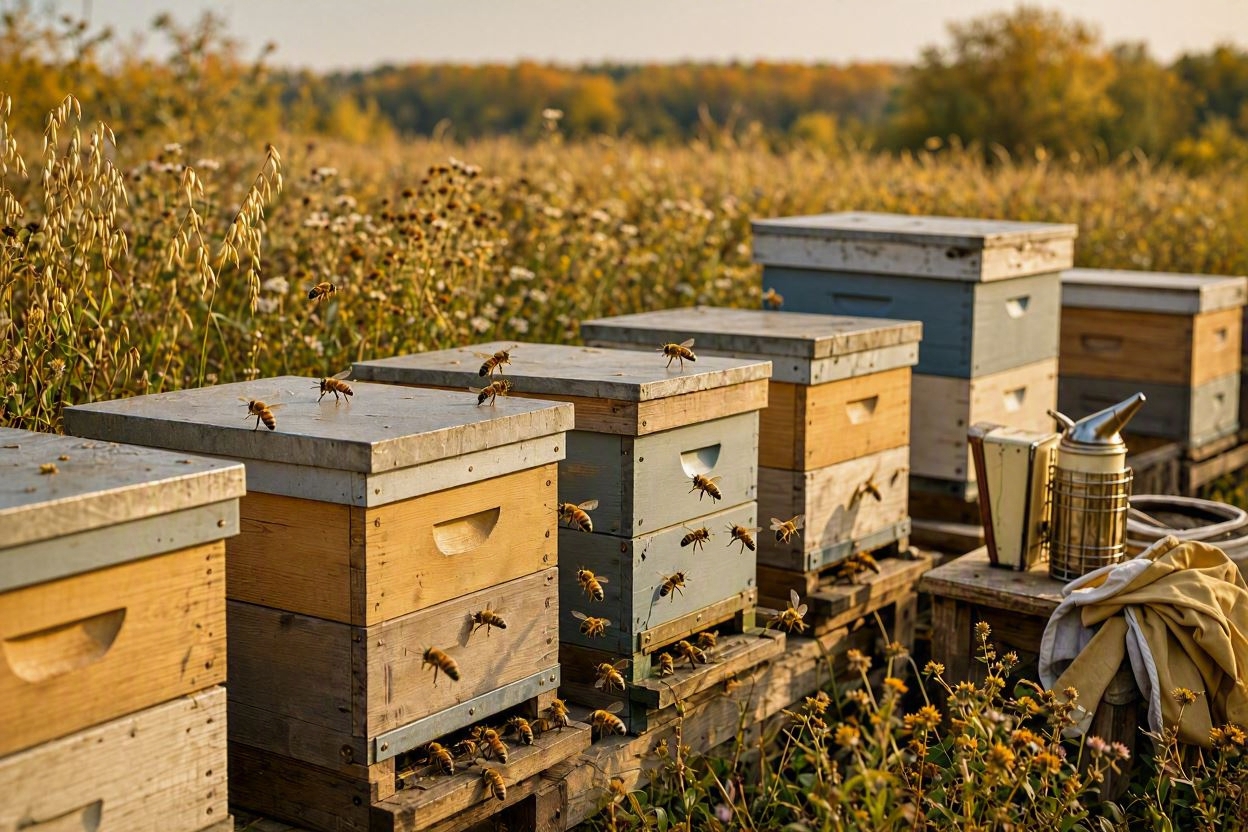
September is one of the most important months in the beekeeping calendar. It is the month when the beekeeper shifts from summer management to winter management. The colonies are no longer judged by how much honey they are bringing in or how fast the brood area is expanding. Instead, the focus becomes survival, reserves, and winter strength. This is the period when a colony either enters winter shaped as a durable, healthy cluster or weakens into a vulnerable, robbing-prone hive with poor brood and insufficient stores.
For anyone who treats beekeeping as a seasonal discipline rather than a series of isolated tasks, September matters because it is the hinge between the late nectar flow and the beginning of real winter preparation. Everything done in this month influences colony size in October, brood survival in November, cluster condition in December, and spring expansion in March. In practical terms, September tells you whether your apiary will be strong, stable, and productive next season, or whether it will be a collection of hives struggling to hold together through cold weather.
That is why the main tasks of the apiary in September are not random or cosmetic. They are analytical, strategic, and repetitive. The beekeeper needs to assess colony strength, feed strategically, monitor mite pressure, check queen quality, remove weak colonies or combine them, confirm winter reserves, reduce entrances, and stop the hives from becoming too exposed to environmental stress. These tasks do not happen by instinct. They happen by observation, measurable thresholds, and a schedule that respects the colony’s biological rhythm.
🐝 Planning your September inspections? A reliable apiary log helps you score each colony before feeding and treatment decisions. Record frames of bees, brood pattern, mite counts, and stores by hive, then compare your notes from one year to the next. Try Beekeeping Diary free to make your autumn decision-making easier.
1. September as the real transition month in the apiary
Many beekeepers think that the key energy of the beekeeping year sits in spring and honey flow season. But September is where beekeeping becomes serious. Spring is about renewal and expansion, summer is about productivity, and September is about conversion: turning nectar and brood into winter survival. This month you are preparing colonies to become clusters, not active foragers.
The biology of the colony changes in late summer. Queens gradually reduce egg laying. The colony begins focusing less on expansion and more on replacement of older bees. The bees that will survive through winter are often already in the brood nest or are being nurtured in the current cycle. So September is a month of pattern recognition. If a colony has poor pattern, weak stores, or a failing queen in early September, the choices you make now will determine whether this hive remains relevant to your apiary in spring.
It is also a month of risk. Weak colonies are more vulnerable to robbing. Strong colonies can become overloaded with nectar and congestion. The weather can suddenly shift from warm to cold. You may still have a few sunny days that feel like summer, but the beekeeper must act as if winter is already on the edge of the horizon. The September apiary must feel organized, not reactive.
For this reason, the main activities in September should be approached as a sequence:
- Assess each colony’s condition and score its strength.
- Identify and correct weak or failing queens.
- Check the pollen and food stores.
- Feed any colony below target reserves.
- Complete or continue varroa treatment.
- Reduce entrances, calm robbing pressure, and consolidate weak hives.
- Prepare the brood nest and winter configuration.
That sequence is not optional. If a beekeeper started by feeding before checking the colony state, they may accidentally overfeed a strong colony that already has enough stores. If they treat for varroa too late, they may be too late to bring down mite pressure before brood decline. If they neglect queen performance, they may overestimate the colony’s future strength. September is not a month to improvise; it is a month to think in terms of colony health and resource balance.
2. The September colony assessment — what to inspect first
The first task each week in September is a standard colony check. Each hive should be opened and evaluated in a consistent order. The beekeeper is not looking for “good vibes”; they are looking for measurable signs of health and viability.
Start with the hive entrance. In September, entrances tell you more than many beekeepers realize. A colony with a normal entrance and a steady stream of foragers suggests the bees still feel active and secure. A narrow, quiet entrance with very little traffic often means a colony is weak and may already be conserving energy. A heavily trafficked entrance or repeated conflict at the hive front can indicate robbing pressure, a failed queen, or an overloaded weak colony trying to defend resources.
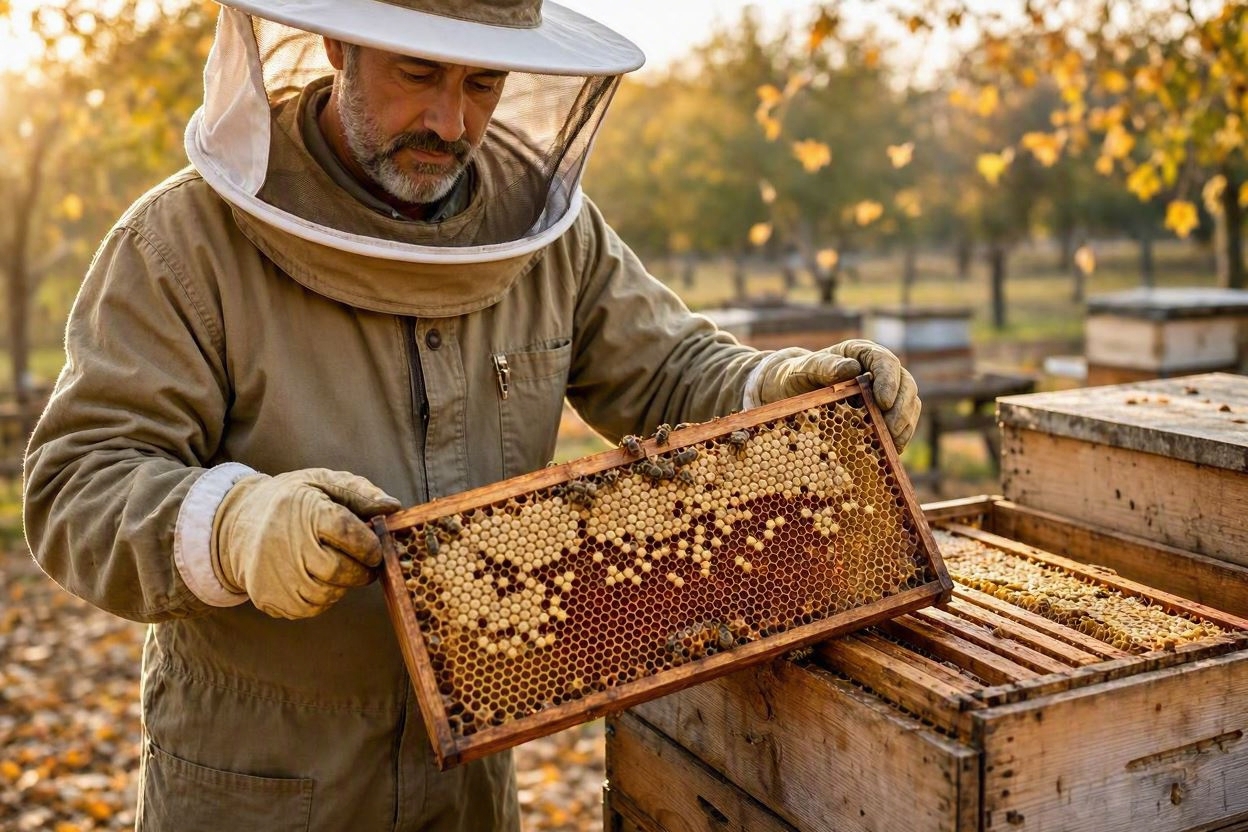
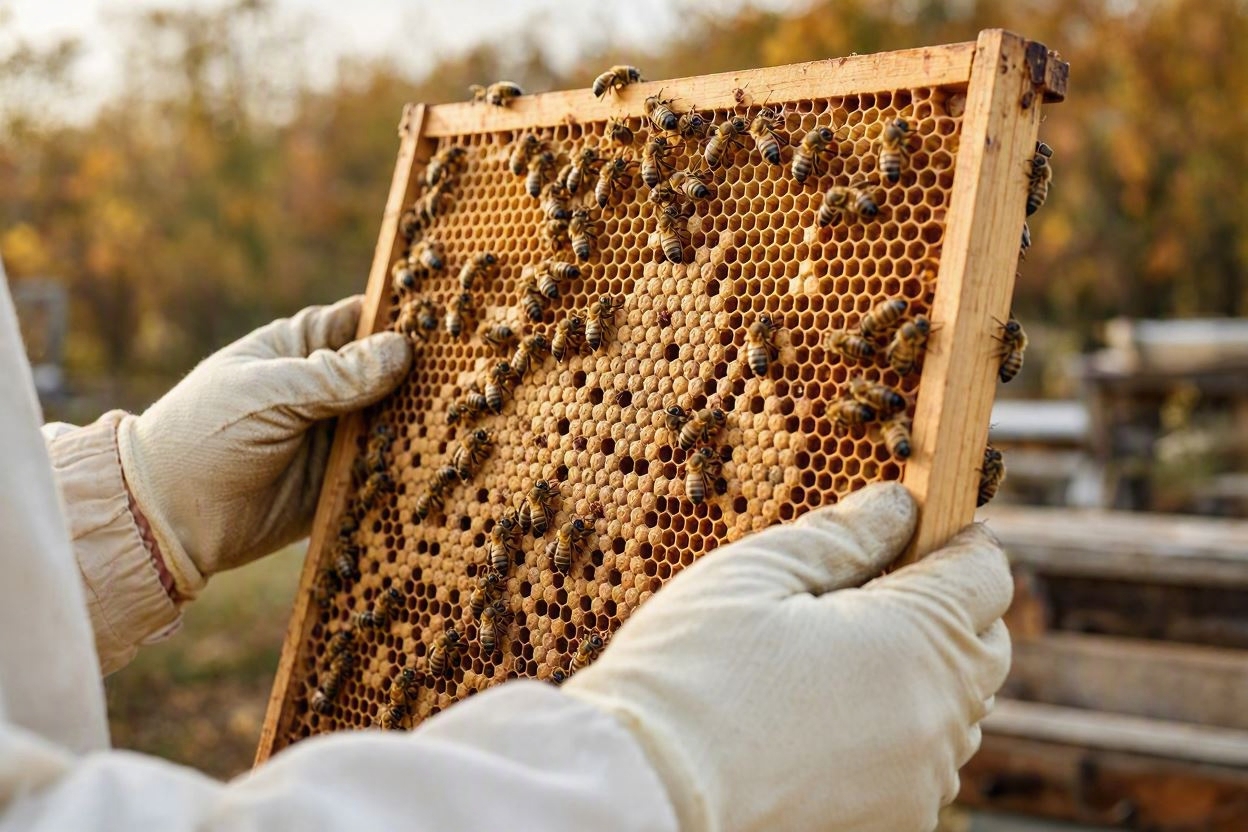
Then open the brood box and inspect the brood pattern. You want a compact brood nest with worker brood in a mostly steady pattern. A good September pattern shows the queen is still laying or has only recently slowed. You should expect some autumn build-up, but there should still be enough brood to keep the colony alive and dynamic. A broken brood pattern, drones dominating the brood area, or a lack of eggs may mean the queen is weak or absent.
At the same time, count frames of bees. In September, a colony with only two or three frames of bees is often too small to winter well. Colonies with four to six frames can sometimes be saved with feeding and manageable mite pressure, but they are one bad week away from becoming fragile. Strong colonies have at least six to eight well-covered frames, and a colony with ten or more frames of bees in September is usually in a good position for winter if stores are adequate.
Finally, estimate the stores. This is critical because September is the month when honey becomes a winter insurance policy. A colony that has enough bees but no stores is not safe. A colony that has stores but poor brood is not safe. The strongest hives tend to have both: enough adult population and enough age-structured reserve of honey and pollen for the coming months. The September apiary should therefore be evaluated with a “colony score” rather than a single impression.
Good colony scoring is simple and effective:
- Strong hive — 6+ frames of bees, compact brood pattern, adequate stores, young queen, low mite load.
- Borderline hive — 4 to 5 frames of bees, mixed brood pattern, moderate stores, some mite pressure, but still salvageable with feeding and close monitoring.
- Weak hive — 2 to 3 frames of bees, poor brood, low stores, poor queen, weak colony. Merge it if possible.
Beekeepers often make the mistake of scoring by “it looks okay” rather than by actual measurable variables. In September, that mindset is costly. The next decision you make about a weak hive will likely be the last major management decision before winter. That is why your observations must be written down and compared against the number of frames, brood pattern, and food reserves across the whole apiary.
3. Feeding and winter stores — September’s most expensive insurance policy
By September, nectar is often declining, and the colony’s natural food intake is no longer enough to support the same level of brood rearing. This makes feeding no longer optional for many hives. Collapsing natural flow, low-mass nectar, and an autumn decline in pollen availability create a scenario in which you must create the conditions for a stable wintering cluster.
What matters is not just the fact that a colony is being fed. It is the quality of the feed, the timing, and the amount. For September, the most common mistake is feeding too little, too late, or with the wrong syrup concentration. A weak colony can appear “alive” in early September and then slip into an empty brood nest by late October if you do not maintain a consistent feed plan.
Most September feeding plans fall into two categories:
3.1 Stimulating feed when the colony is still active
If the colony is still actively rearing brood and the weather is warm enough, a thin syrup (usually around 1:1 sugar to water) can support brood expansion. This is particularly useful for strong colonies when you want them to continue rearing winter bees and maintain a healthy population. It should be used carefully because too much thin syrup at the wrong time can cause delayed colony maturity and poor winter readiness if the colony is already near its target stores.
It is more common in September to shift from 1:1 syrup to a heavier feed once the final colony assessment is complete. Why? Because the objective is now not to stimulate growth but to build winter reserves. A heavier syrup gives energy-dense stores, which is more appropriate for a colony preparing to cluster. This is especially important if the weather is turning cooler or if nectar sources are almost gone.
3.2 2:1 syrup and winter store building
The classic late-season feed for colonies that need to build stores is a 2:1 sugar syrup. It is denser and more useful for creating a higher-calorie reserve. Compared to 1:1 syrup, 2:1 syrup has less water and therefore reduces the amount of energy the bees need to evaporate it before it becomes a food reserve. That makes it more efficient for autumn feed.
But not all colonies need the same volume. A strong colony with six or more frames of bees may need several litres to reach a safe winter reserve. A borderline or weak colony may need more frequent feeding in smaller volumes, as a single massive feed can create a syrup storage problem and encourage cooling or moisture stress if the colony cannot process it quickly. It is often better to feed measured, regular amounts than to dump a large emergency feed into a weak hive and leave it to sit in the super.
As a rough rule, colonies in temperate climates often need 15 to 20 kg of total stores by the onset of winter. In milder climates, 12 to 15 kg can be sufficient. In colder regions, a colony may need 20+ kg. The beekeeper must decide based on colony size, insulation, local climate, and access to winter forage. This is where apiary records become invaluable. A strong colony with good stores can be left alone; a weaker colony with a history of poor stores may need repeated support until it reaches a safe total.
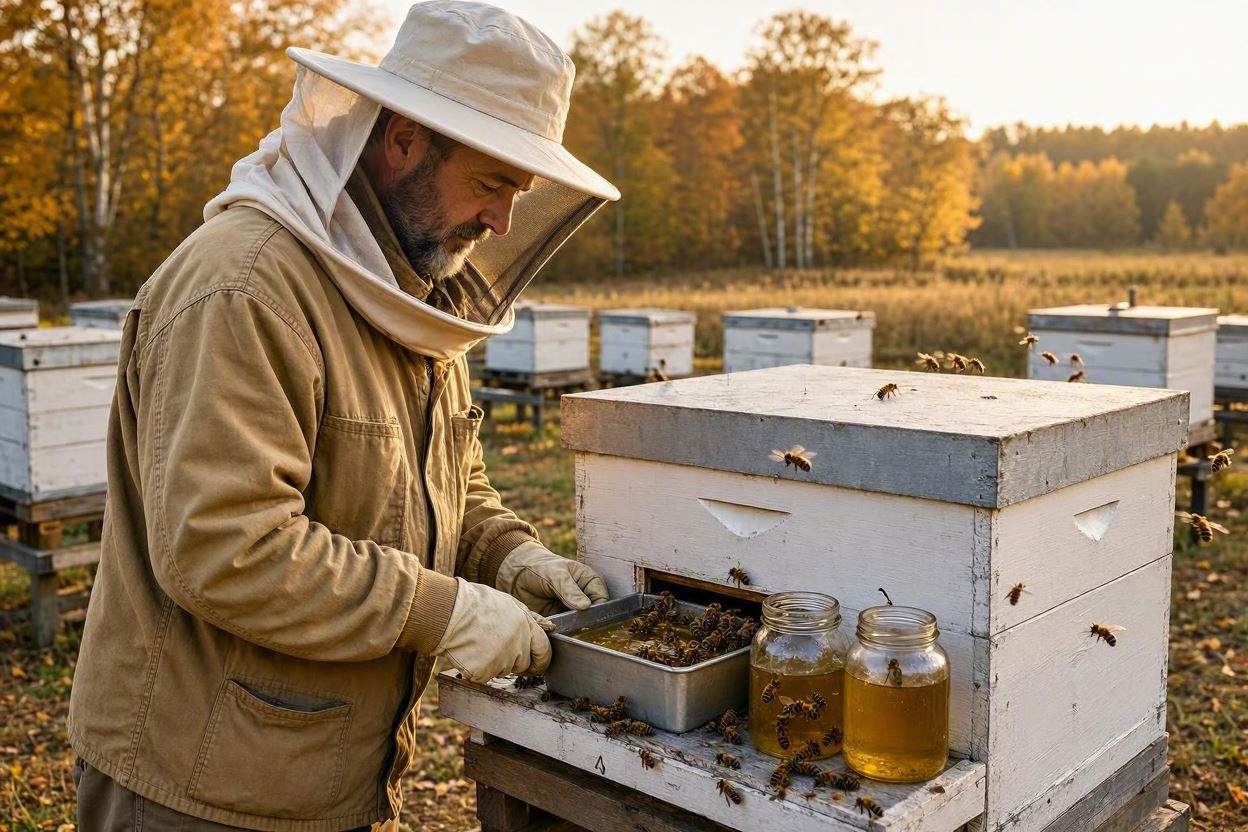
Never feed blindly. A small colony that has access to enough nectar can still be robbed out, especially in September when nectar supplies fluctuate. You should also check that your feeding equipment is well-designed: entrance feeders can be useful for a quick top-up, but they are more vulnerable to robbing and moisture issues. Top feeders or internal frame feeders are often better for autumn feeding because they are less exposed and help prevent the colony from being invaded by robbers.
When the feed is delivered, remember that the aim is not just to “give them something.” The aim is to convert the hive into a colony with reserves, a functioning brood pattern, and a winter cluster that can hold steady in cold weather. This is why September feed management is really a form of strategic winter planning.
4. Varroa control — the month when mite management becomes critical
No September apiary schedule is complete without varroa mite management. By this point, a beekeeper understands that varroa is not an abstract parasite lurking in a corner of the hive. It is a seasonal process that changes with brood, nectar flow, weather, and colony size. The colony may appear healthy while the mite population quietly rises. Then by autumn, the damage is visible in weak brood pattern, poor winter survival, or a failing queen.
September is often the final major window for the main varroa treatment of the year. The treatment must be timed to coincide with the colony’s brood cycle and the expected climate conditions. The precise product depends on your region, local weather, and the historical efficacy of the products you use, but the rule is consistent: do not postpone treatment until later unless you are certain the colony is already below the threshold and you have a clear plan for a follow-up treatment.
During warm autumn days, the colony still has enough brood and adult bees to make treatment effective. Formic acid products can work well when cooler, but some are temperature-sensitive. Amitraz strips and some synthetic treatments are quite effective when applied according to label timing. Oxalic acid is often reserved for broodless or nearly broodless periods, when it is used as a follow-up or winter treatment. In all cases, the beekeeper should use sticky board counts or brood checks to help determine the real mite load before deciding whether to act.
A common mistake is to treat only once and assume it is enough. In practice, successful varroa management often requires both a treatment and a verification. You do not simply throw in strips and hope. You record the mite count before treatment, monitor after treatment, and compare the result. If the population is still high, you need a second intervention. September is the month when this discipline matters most because there is little time left for a colony to recover if the mite load remains excessive.
Varroa management also impacts brood pattern. A hive heavily infested with mites often shows some brood damage, uneven brood frames, and poor development. This is why it is so important to combine mite control with queen and brood assessment. You are not trying to “fight mites” as a disconnected task. You are trying to preserve the future winter population of the colony and keep the bees healthy long enough to form a stable cluster.
5. Queen management in September — saving or replacing the colony’s future
September is a strategic month for queen management because the hive is either continuing to produce winter bees or it is failing to do so. A strong queen in September is one of the most valuable assets in the apiary because she positions the colony for good brood replacement before the long cold month. A weak or failing queen is the hidden risk behind many winter losses.
As soon as the beekeeper enters the brood nest, they should assess whether the queen is still laying a productive pattern. If the queen is failing, the decision is urgent. Replacement can still happen in September, and in many climates it is absolutely feasible. A new queen can take over late brood production before the colony transitions to winter. In fact, this timing can be ideal: drones are still present, there is still warm weather, and there is enough time for the new queen to become productive before winter.
However, requeening in September is only sensible if the colony remains viable. A colony with fewer than three or four frames of bees and a failing queen is rarely worth requeening unless you have a special reason to keep it. In that case, the stronger move is often to unite it with a stronger colony. This is the tough reality of September beekeeping: you must make rational decisions about what can survive, not just what you want to keep alive.
Strong queens in September also influence your feeding strategy. A colony with a strong queen can turn feed into brood replacement. A colony with a poor queen may simply use the feed to maintain a few workers and then drift into a weak winter cluster. A good beekeeper recognizes this difference. They do not treat all colonies as equal. They understand that queen quality and the feeding strategy are linked.
To assess the queen properly, look not only for eggs but also for compact brood pattern, absence of barren cells, and uniform distribution of brood in the centre frames. If the queen is older or the pattern is spotty, the beekeeper should act. If the colony is weak enough that brood replacement is not likely to be meaningful, they should plan a merge rather than a requeen. The choice is not emotional — it is biological judgement based on evidence.
6. Merging weak colonies and reducing total winter risk
One of the hardest truths in beekeeping is that autumn is not the time to keep every colony alive. Sometimes the right decision is to combine weak hives into stronger ones. The mathematics of winter survival are straightforward: one strong colony with six to eight frames of bees and good stores is much more likely to survive than two weak colonies with three frames each and poor food reserves.
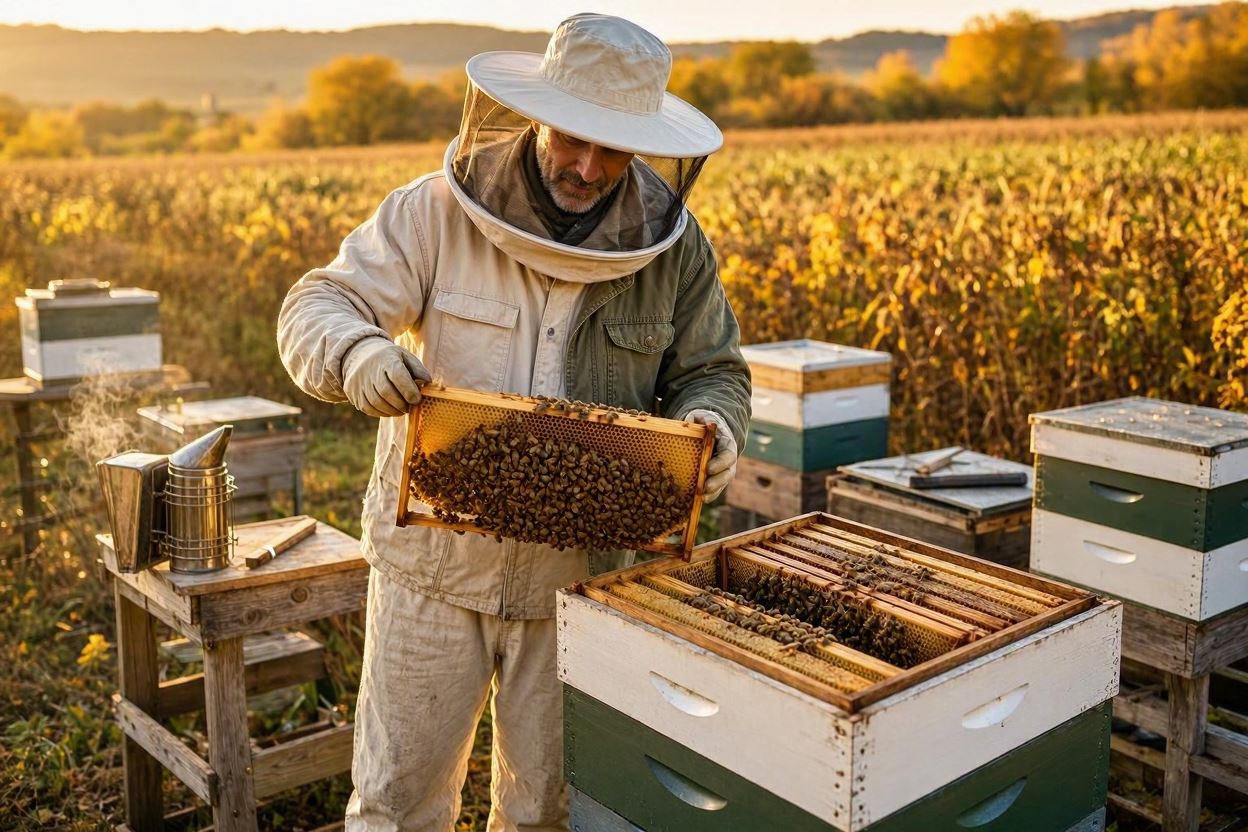
This is one of the main activities of the apiary in September because a hive that is weak in late summer is often not going to improve if left alone. If a colony is too small, too light, and lacks brood, it will spend its remaining energy defending itself and losing heat. The colony may also become an easy target for robbing and drift. The beekeeper then faces the situation of “keeping an insect collection” rather than managing a functional colony.
Combining hives generally follows a simple routine. The stronger colony receives a sheet of newspaper placed over the brood box. The weaker colony is stacked above it with the queen removed or moved into a lower hive arrangement depending on the method used. Over a day or two, the bees chew through the paper and the two pheromone systems mix. This process is often very effective and avoids the fighting and queen death that can happen when you simply shove colonies together.
Some beekeepers hesitate to merge because they dislike losing a colony count. But in autumn, colony count is not the same as field success. Ten well-managed hives that survive winter are more valuable than fifteen weak hives that freeze, starve, or disappear into the autumn cold. September management is about maximizing expected survival, not maximizing the number of hives you keep because they exist.
Also consider that by combining, you can keep a productive queen and a stronger cluster. This preserves more potential for spring build-up than leaving two weak colonies to struggle with near-empty brood chambers. In a region with cold winters, strong and moderate colonies are far more worth keeping than weak, unstable groups.
7. Robbing prevention and reduced entrances — the quiet army of September
Weak colonies are exposed in September because robbing pressure rises as nectar flow declines. Stronger colonies, sensing weaker hives, begin feasting on their stored honey. This is one of the most dangerous and highly visible autumn problems. A weak colony can be robbed out in a matter of a day or two, leaving behind a few dead bees and a stripped brood nest.
Robbing prevention starts with management decisions, not just a narrow entrance. Reduce entrances for weaker hives, keep colonies closed and secure, avoid leaving supers open when inspecting, and do not leave honey-scented spills on the ground. In warm weather with a shortage of nectar, even a slow-moving inspection can invite robbers. Inspect quickly, replace covers firmly, and work one colony at a time.
Entrance reducers are particularly useful in September. They reduce access to suspicious foragers, help the colony defend itself, and make it easier for a weaker hive to maintain warmth. A narrow opening is not a sign of poor management; it is often a sign of mature autumn management. The honey bees themselves will use the narrow entrance to defend the colony more effectively. A hive that is not prepared to defend itself in September is often a hive that is already too weak to survive the colder season.
One of the gentler but critical operations of autumn is making sure every colony has enough internal warmth. In weak colonies, heat escapes easily, and the cluster becomes less stable. When the colony is also being robbed or fighting to maintain brood, the problem compounds fast. This is why September is the month when the beekeeper often must pace the apiary. It is not just the number of hives you manage — it is the number of hives you can support without creating energy demand and defense stress.
8. The role of weather and field conditions in September
Weather can make an excellent September plan fail if the beekeeper ignores it. The month can feel warm and stable for long stretches, then suddenly turn wet and cool. These shifts directly affect the colony’s ability to forage and process feed. Some beekeepers do not realize that a clear, sunny day in early September is still valuable for sugar feeding because it gives the bees time to process the syrup before the weather drops again.
September is also the month when bees may still visit late floral sources, but those sources are inconsistent. That means you cannot simply assume that a colony with some nectar will have enough stores. The beekeeper must estimate stores and compare them to the colony’s consumption. A colony that appears “busy” with foragers might still be a food-deficit colony if it has a weak brood nest and a poor pattern. The key is to evaluate total reserves, not just visible flight activity.
Weather also influences mite treatment timing and feeding speed. If a period of warm weather arrives, it may be the optimal window to administer feed or treatment. If a sudden cold front is coming in, the beekeeper may need to close up the hive sooner and avoid repeated manipulations. The colony does not need abundant openings in September. It needs controlled management.
This is also the time to watch around the hive for signs of moisture stress, especially if the season is wet. Honey bees use their cluster to manage warmth, but they cannot prepare effectively if the colony is damp or is being overfed with too much thin syrup in a damp chamber. Good beekeepers manage the internal environment the same way they manage the external weather: with care, measurement, and practical timing.
9. September sanitation, disease awareness, and colony health checks
September is not only about food and mites. The month also reveals the hidden health of the colony. The beekeeper should actively check for signs of nosema, poor brood quality, excessive drone brood, chalkbrood, and brood disease indicators. Many colonies that are not clearly ill still show subtle signs of stress, and those signs are amplified by the reduced nectar flow.
One crucial step is to remove weak or damaged combs and clean any equipment that may carry disease or moisture. In autumn, old brood combs with poor brood pattern or signs of chalky infection should be carefully reviewed. If a hive has an ongoing disease pattern, the beekeeper may decide to replace comb or move it away from the healthy apiary to reduce cross-contamination. Some brood diseases are more active when the colony is weak or under stress.
Sanitation is also important from an operational viewpoint. Bees keep moving in and out of the hive, and weak colonies are especially susceptible to pests and opportunistic robbers. Every truncated inspection should leave the hive secure and the entrance controlled. Leaving a hive open after the inspection is no longer acceptable in September. The small gap between “just a few minutes” and “too long” can be the difference between a stable colony and a robbed colony.
Beekeepers should also consider the broader beekeeping system at this time. If one yard has multiple weak colonies, the beekeeper may decide to move the stronger colonies together, rotate frames, or reduce the number of exposed hives in that area. This prevents the apiary from becoming unbalanced, where the stronger colonies dominate and the weaker ones are left vulnerable. In September, apiary-level thinking matters as much as individual hive-level thinking.
10. A realistic September action plan for the apiary
If you want a practical, field-ready September workflow, here is a realistic sequence that matches how most successful beekeepers operate.
Week 1: Evaluate and score the whole apiary
Open every colony and assess queen quality, frames of bees, stores, brood pattern, and mite levels. Record these numbers in a notebook or on your phone. Identify weak or failing colonies early so you have time to react.
Week 2: Feed according to need
Feed strong colonies only if they are below target stores. Feed weaker colonies more consistently. Do not overfeed the entire apiary; feed by need. Use feeders that reduce robbing risk and leave enough space around the cluster for the bees to move and maintain warm temperatures.
Week 2 to 3: Treat varroa and re-check mite numbers
Apply the main varroa treatment where needed and verify the result with a follow-up count or a brood inspection. Do not assume the first treatment solved the problem but do not panic if the treatment does not eliminate every mite in one week. Follow the product guidance and make a measured call.
Week 3: Merge and reduce risk
Combine weak colonies, reduce entrances, and make sure the stronger colonies are not robbed from all sides by weak hives nearby. Do not delay merges if the colony has poor stores and poor brood.
Final October transition: prepare for winter
Check that each colony has enough stores, that the entrance is reduced, and that the brood nest is properly insulated. The best September hives are the hives that begin October as calm, well-supplied, and stable.
It is important to remember that September is not a season for improvising; it is a season for monitoring. A colony should not be treated as “fine” because it is still flying. Flight activity is not the same as store security or winter readiness. A hive that still has a steady stream of bees but no substantial stores can still become a failure in autumn. Similarly, a hive that seems low in traffic but has a compact brood pattern and good reserves may be perfectly healthy and preparing for winter.
11. Why September work matters so much for the next beekeeper year
Many beekeepers underestimate September because it is not the brightest, most active, or most sweaty month. But it is one of the most predictive months in the whole beekeeping year. The actions completed then determine the quality of the spring colony, the number of colonies that survive, and whether the beekeeper has to re-establish from scratch after winter.
What makes September so decisive is that it is where the beekeeper stops managing short-term growth and starts managing long-term survival. That shift requires discipline, confidence, and the willingness to make hard decisions. This may include feeding a colony you would rather not feed, requeening a hive that is otherwise valuable, or combining a weaker hive before it becomes a drain on your apiary. The beekeeper who understands September is the beekeeper who is preparing the next season before the season even begins.
The month also reminds us why beekeeping is so different from a hobby that is simply “nice to the bees.” It is a system of living organisms with thresholds, safe ranges, and seasonal timing. When the colony gets the wrong feed at the wrong time or the wrong queen in the wrong month, the outcome can be disastrous. When the beekeeper manages all the factors accurately, the colony responds with stability and resilience. That is the deeper lesson of September: the apiary does not become safe by accident; it becomes safe by attention.
12. Conclusion — September is the foundation for autumn survival
September is not a month to rush. The main activities of the apiary in this month are about building a colony that can survive cold weather, maintain a healthy winter cluster, and emerge in spring with enough strength to expand again. That means assessing brood and queen quality, evaluating food stores, feeding carefully, treating varroa, reducing entrances, combining weak colonies, and making sure no hive is left too exposed to robbing or late season stress.
Success in September is not measured by the number of tasks you complete in one day. It is measured by the quality of the decisions you make and whether those decisions result in stronger colonies come autumn. If a hive is too weak, no amount of optimism will save it. If a colony has enough stores and a healthy queen, the beekeeper can let it settle into winter with confidence. If the mite pressure is high, treatment must be prioritized. If the colony is robbing-prone, the entrance and the inspection schedule need to change immediately.
That is why September is a great teacher. It rewards a beekeeper who thinks in biological terms and punishes the beekeeper who only reacts to visible symptoms. The strong apiary in October is rarely accidental. It is built through a deliberate month of analysis, preparation, and practical decisions. Do the work now, and the bees will have a much better chance of surviving the winter and building the next season together.
🐝 Need a clearer apiary plan? Keep every September colony score in one place — queen health, frames of bees, stores, mite checks, and feeding logs. Try Beekeeping Diary free and turn your autumn inspections into a repeatable planning system.
Frequently Asked Questions
What is the single most important September apiary task?
Checking colony strength and winter stores is the highest priority. A colony that is weak but full of honey may still struggle, and a colony that is strong but low on stores may fail. September is about balancing strength, food, queen quality, and mite pressure.
Should I feed all hives in September?
No. Feed by need. Strong hives with adequate stores may not need additional syrup, while weaker hives or late-nesting colonies often do. Overfeeding is less of a problem than underfeeding, but it can still disrupt hive management if done indiscriminately.
When should varroa treatment be completed?
As early as practical in the autumn, ideally before the colony is too weak and before the cold weather makes treatment less effective. Monitoring mite loads before and after treatment is best practice.
Is it okay to leave weak colonies in the apiary?
Only if they are healthy and well supported. If they are weak, light, queenless, or heavily infested, combining is usually the better choice. August and September are the months when this choice has the greatest impact on next spring.
How do I know whether a colony has enough winter stores?
Use both visual and measured assessment. Count frames of capped honey, estimate total weight, and compare that to the colony’s size and local winter severity. For most temperate climates, 15 to 20 kg of stores is a safe target before winter.
Can I still requeen in September?
Yes, if the colony is otherwise viable and the weather remains warm enough for mating. A healthy, young queen can restore brood production and winter stability. But if the colony is too weak, the stronger decision is to combine rather than requeen.