Main Beekeeping Activities in October — Complete Winter Preparation Plan (2026)
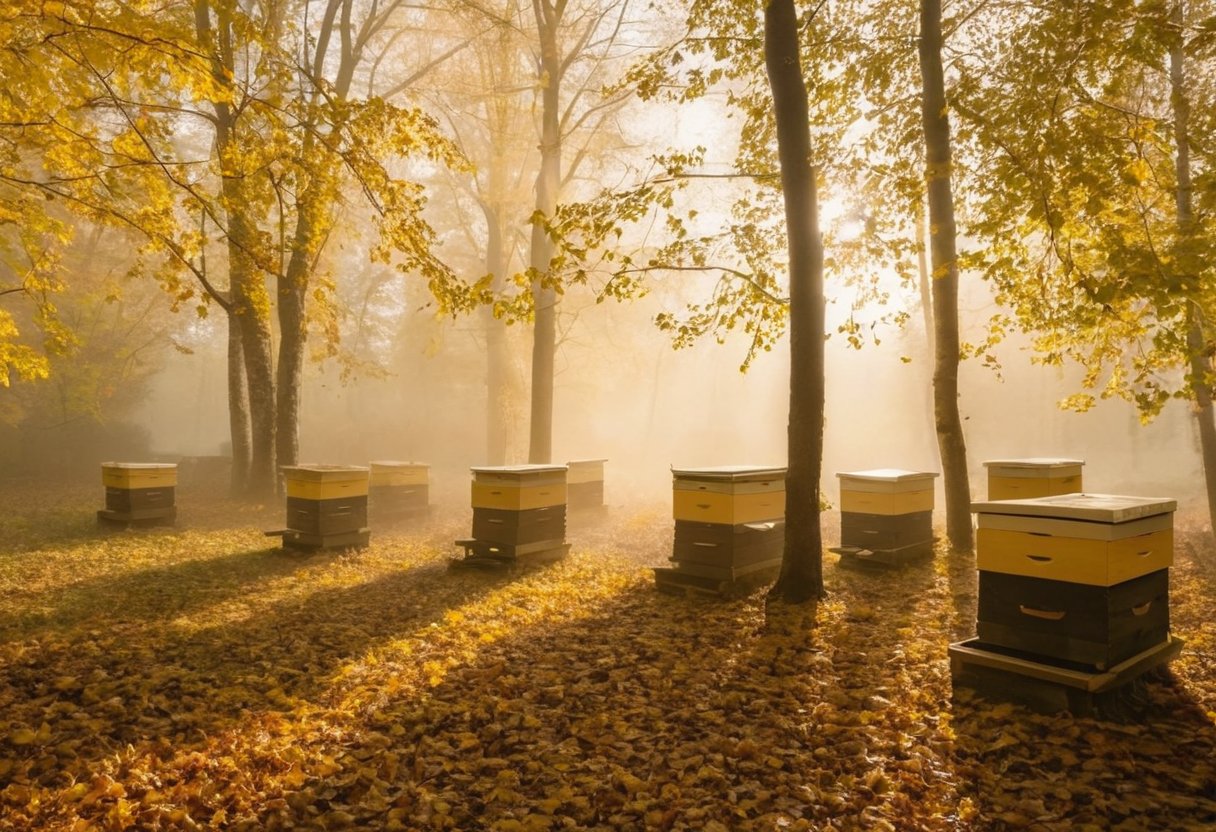
There is an old truth in beekeeping that every experienced keeper repeats like a prayer: honey is not made in spring — it is made in the autumn of the previous year. The strong spring colony that comes out of winter quickly, builds up powerfully and catches the early nectar flow is created by the decisions you make in October. This is the month when the beekeeper closes the active season — and also the month when we lay the foundation of the next one.
October is a strange month at the apiary. Outside everything looks quiet: the flow has stopped, flight activity has dropped, mornings are cold, and the leaves are falling. That quiet is deceptive. Inside the hive, two of the most important processes of the year are happening: the last generation of winter bees is emerging, storing in their bodies the protein reserves the colony will live on until spring, and the Varroa destructor mite is making its final attempts to reproduce in the shrinking brood. That pairing — winter bees versus varroa — decides whether next spring you open a strong apiary or count empty hives.
This article is the complete monthly plan for October, written for temperate-climate beekeeping. We will walk through the ten main activities in their logical order, with concrete numbers, doses and deadlines, with the honest mistakes everyone makes, and with a week-by-week calendar you can follow directly. And if you keep a beekeeping diary — and after this article you will want to — every one of these activities has a ready place in the free Beekeeping Diary app, while an analysis of the wintering site itself takes minutes with our free tool Beehive Analyzer.
The plan: ten main October activities
Before we go into detail, here is the map of the month. The ten activities are listed in executable order — each depends on the previous one and each has its optimal window:
- Final inspection of every colony — strength, queen presence, real size of stores (first week of October).
- Fall feeding with 3:2 sugar syrup — while the weather allows, ideally until mid-month (weeks 1–2).
- The final varroa treatment — oxalic acid in brood-free or near-brood-free conditions (mid-month onward).
- Narrowing and arranging the winter nest — honey above and around the cluster, empty frames out (late October).
- Mouse protection — entrance guards and reduced entrances (late October, before the first hard frosts).
- Ventilation and moisture control — top ventilation, moisture quilts (late October).
- Hive insulation — wraps, roof insulation, stands; without overheating (late October into early November).
- Wind protection and apiary layout — leveling hives, windbreaks, shelter from cold winds.
- Water and final apiary hygiene — water sources, clean stands, mowed grass.
- Equipment processing and storage — frames, boxes and extractors versus wax moths and rot (all month).
Plus one bonus activity that outweighs all ten together: keeping records and planning spring. Without notes, October passes from memory — and memory-based beekeeping is expensive.

Flow Bee Hive — Automatic Honey Harvester
- ✅ Drains honey at the turn of a handle — no smoker needed
- ✅ Harvest in 20 minutes without disturbing the bees
- ✅ Food-safe FDA-approved plastic — bees stay calm
Premium cedar Flow Hive with automatic drainage.
View on ApiaryPro →1. The final inspection: one last look inside
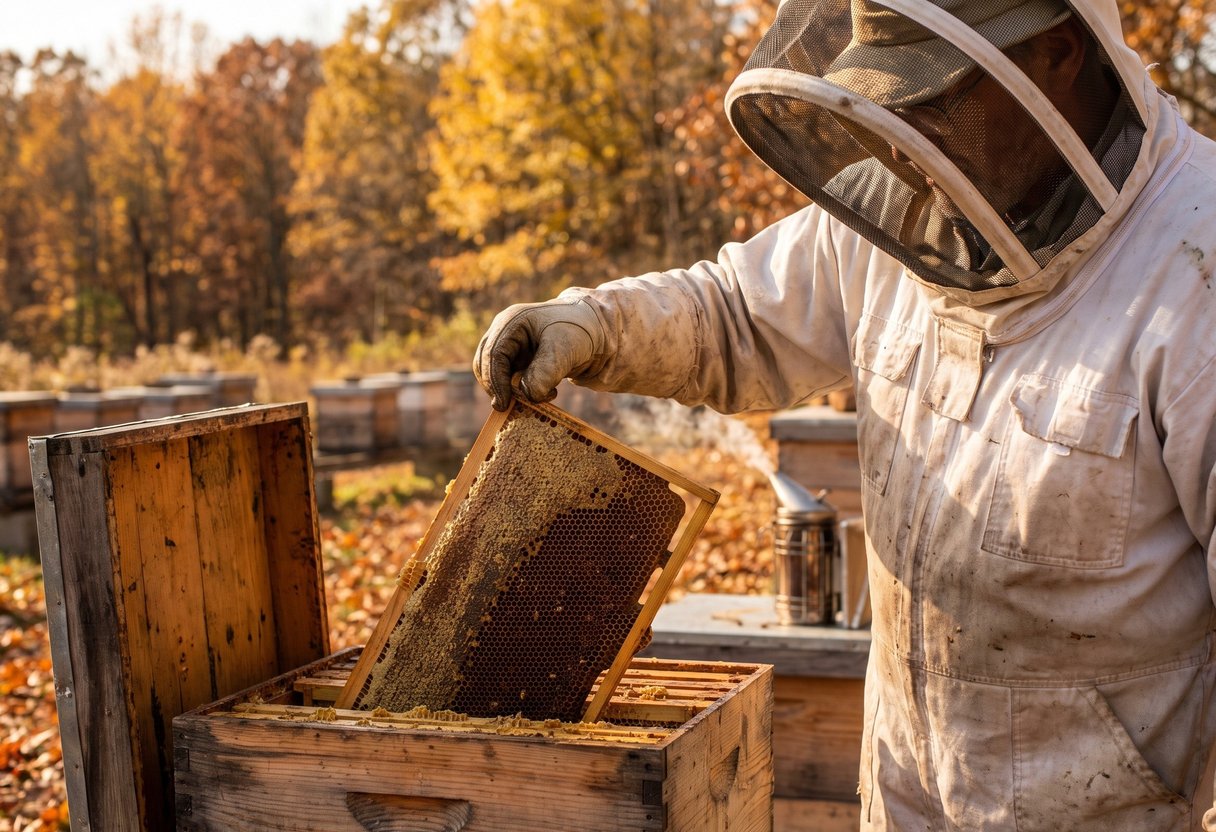
The first week of October is the last realistic window for working inside hives at comfortable temperatures. The goal of this inspection is not to look at everything — it is a quick inventory that answers four questions for every colony:
- How strong is the colony? Measured in frames covered with bees — not by impression. A colony that does not cover four frames will almost certainly not survive the winter alone.
- Is there a working queen? In October we do not look for the queen herself — we look for evidence of her: presence of brood (September generation), a compact nest, calm bees. Scattered, spotty brood or laying workers are warning signs of a lost or exhausted queen.
- What are the real stores? You lift each frame from the edges inward and judge the weight. A full standard frame holds roughly 4–5 lbs (2–2.5 kg) of honey. Count the kilograms frame by frame — guessing is how colonies starve.
- Any signs of disease? The last chance to see brood: sunken, perforated cappings, chalkbrood mummies, the sour smell of European foulbrood — all easier to handle now than to discover a dead colony in February.
Write everything down — strength, stores in kilograms, brood presence, notes — for every colony by name and number. This is exactly the moment when the empty notepad becomes data that next spring tells you why one colony survived and another did not. If writing by hand is a chore, the free Beekeeping Diary app has ready fields for the autumn inspection — from colony strength to kilograms of stores — and lets you track each hive's history over time.
Practical rule: work quickly, in the middle of the day, at temperatures above 14–15°C, without excessive smoke. Opening a nest at 10°C chills the brood and disturbs the winter bees. If the day does not allow it — skip the day; never open a hive at 8°C.
2. Fall feeding: 3:2 syrup and the exact kilograms
The syrup bees take in October is not "for honey" — it is for themselves. The goal is for the colony to enter November with 33–40 lbs (15–18 kg) of total stores in the winter nest (strong two-box colonies — up to 50 lbs / 22 kg). Why exactly that much? A normal colony consumes on average 2–3 lbs (1–1.5 kg) per cold month, and a real temperate winter runs five to six months (November through April) — and it is never uniform: warm February days break up the cluster and increase consumption, and early spring flight throws the colony into brood rearing and building before there is any nectar outside.
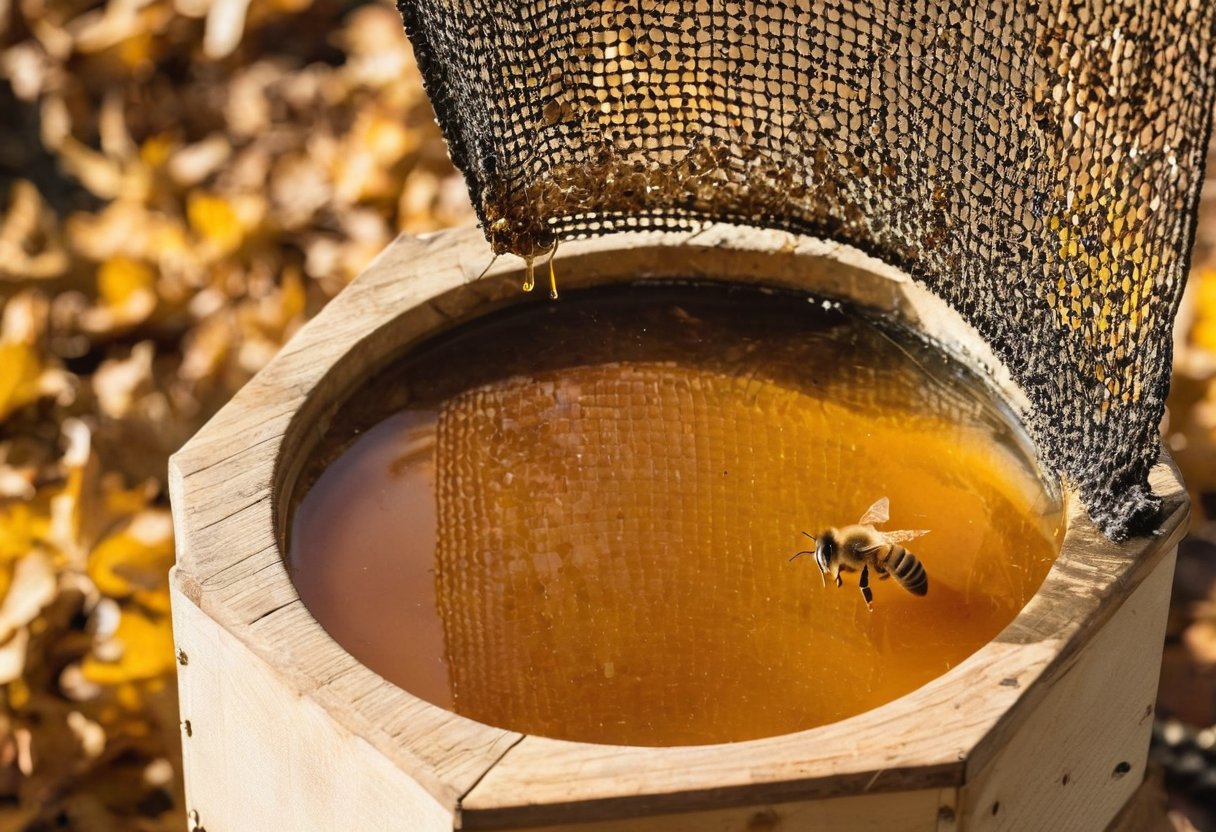
In October the correct recipe is 3:2 — three parts sugar to two parts water (e.g. 3 kg sugar to 2 liters of water). The more concentrated syrup makes sense exactly now: bees evaporate less water and cap it faster, and every drop of evaporated water is energy drawn from the bodies of the young winter bees. A 1:1 syrup in October is waste; commercial inverted sugars and feeding supplements are optional — the bees produce their own invertase.
How do you calculate what is missing? From the final inspection you already know the real kilograms. If a colony has 22 lbs and the target is 35 lbs — it is 13 lbs short. Since bees process syrup at roughly 90% efficiency (some goes into the work of processing), give about 15 lbs of sugar per colony, split into 3–4 takes. Do not give it all at once: a large volume of syrup stagnates and ferments, and bees store it poorly. Doses of 2–3 liters every 3–4 days work best.
When to stop syrup? The guide is temperature, not the calendar. Bees actively take and ripen syrup at day temperatures above 10–12°C. After mid-October, when nights fall steadily below 5°C, syrup begins to stagnate — and stagnant syrup ferments and causes dysentery at exactly the time bees must not be sick. That is when you switch to winter fondant or candy — a firm sugar mass placed directly over the frames, which bees consume slowly all winter without needing to ripen or cap it. Candy is also the lifesaver of February–March, when the cluster has moved and eaten the frames around it.
For ready-made winter fondant and candy boards, browse winter bee candy boards on Amazon — and make sure your feeders have drowning screens, because every bee drowned in October syrup is one winter bee fewer in February.
3. The final battle with varroa: why October is oxalic acid month
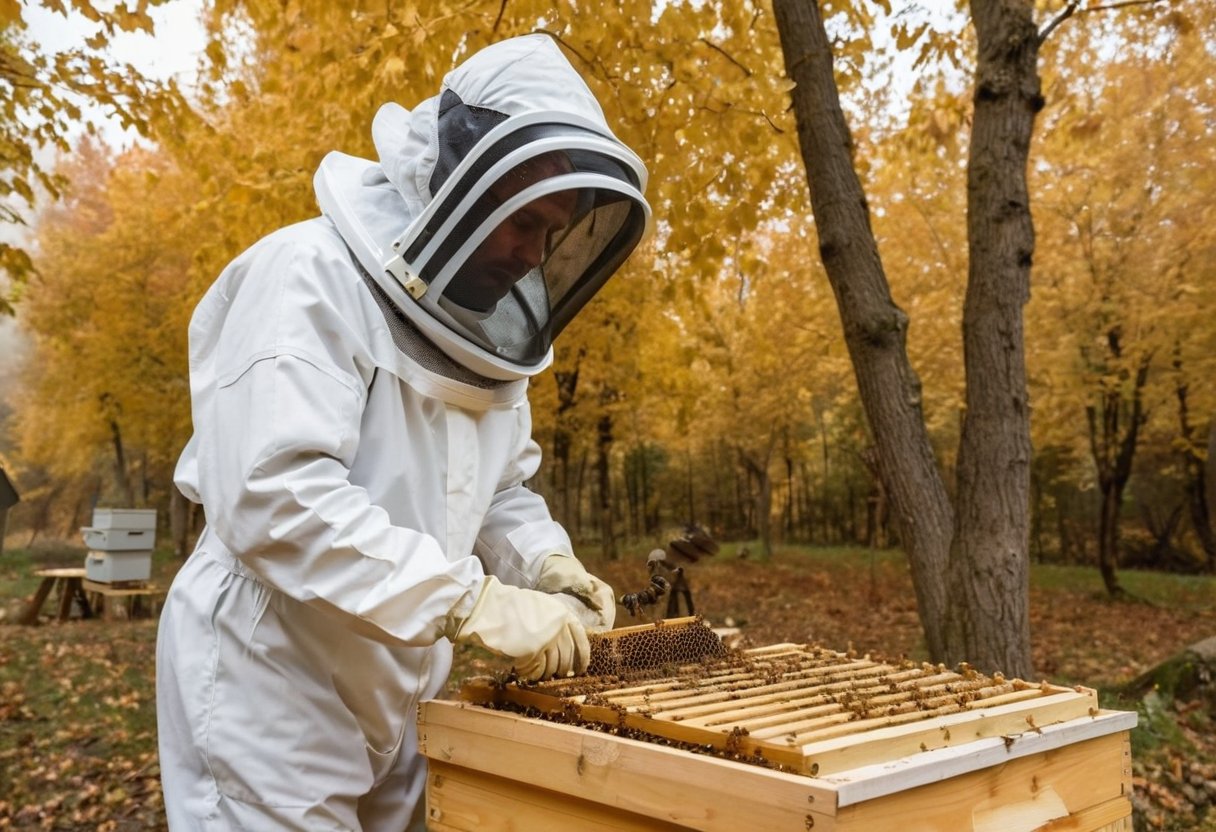
If there is one activity in this monthly plan that must never be skipped, it is the final varroa treatment. The reason is biological and merciless: all summer the mite hides and reproduces inside capped brood, where no treatment fully reaches it. In October, brood rearing stops. When the last brood hatches, every mite in the colony is forced to sit on the bodies of adult bees — exposed, defenseless, concentrated. A single oxalic acid treatment at that moment kills over 90% of the population. Never during the year is the mite more vulnerable.
That is why the winter treatment is not an "extra" after the summer one — it is the protection itself. The autumn generation of winter bees, which carries the colony's protein reserves through the whole winter, must enter the cluster clean. A colony that winters with a 3% infestation loses its winter bees through November and December and opens spring with a wrecked protein resource that no spring feeding can replace. The colony may not die of the mites themselves; it may die in February of "unknown causes", with a seemingly full box of honey — while the real cause sat on its bees back in October.
How to judge the moment? Do not treat by calendar, but by brood. Watch the last capped frames: when brood has genuinely finished (usually mid-to-late October depending on region and altitude), a few days after the last brood hatches is ideal. If you use monitoring trays, check the mite drop — a high count after the September treatment (see our seasonal varroa tracker for the full year-round strategy) tells you the final treatment is not optional.
The two main methods:
- Dribbling with 3.2% oxalic acid in 1:1 sugar syrup — 5 ml per frame covered with bees, applied carefully onto the bees between frames. Cheap, fast and effective at temperatures above 5°C. Use only once per season — at higher cumulative doses oxalic acid damages the bees.
- Vaporization (sublimation) with an electric vaporizer — 1–2 grams of oxalic acid crystals evaporated inside the hive through the entrance or a dedicated port. You do not open the hive, you do not break the cluster, and it works at lower temperatures. Whichever method you choose, wear gloves and a respirator — oxalic acid is a strong organic acid and its dust and fumes seriously irritate the airways.
For those who prefer a ready tool, oxalic acid vaporizers on Amazon cover the whole price range. Whichever you choose — do a mite count before and after the treatment, so you know the real effect instead of trusting the label. And write the date in your diary: next autumn will thank you.
4. Arranging the winter nest: thermal engineering
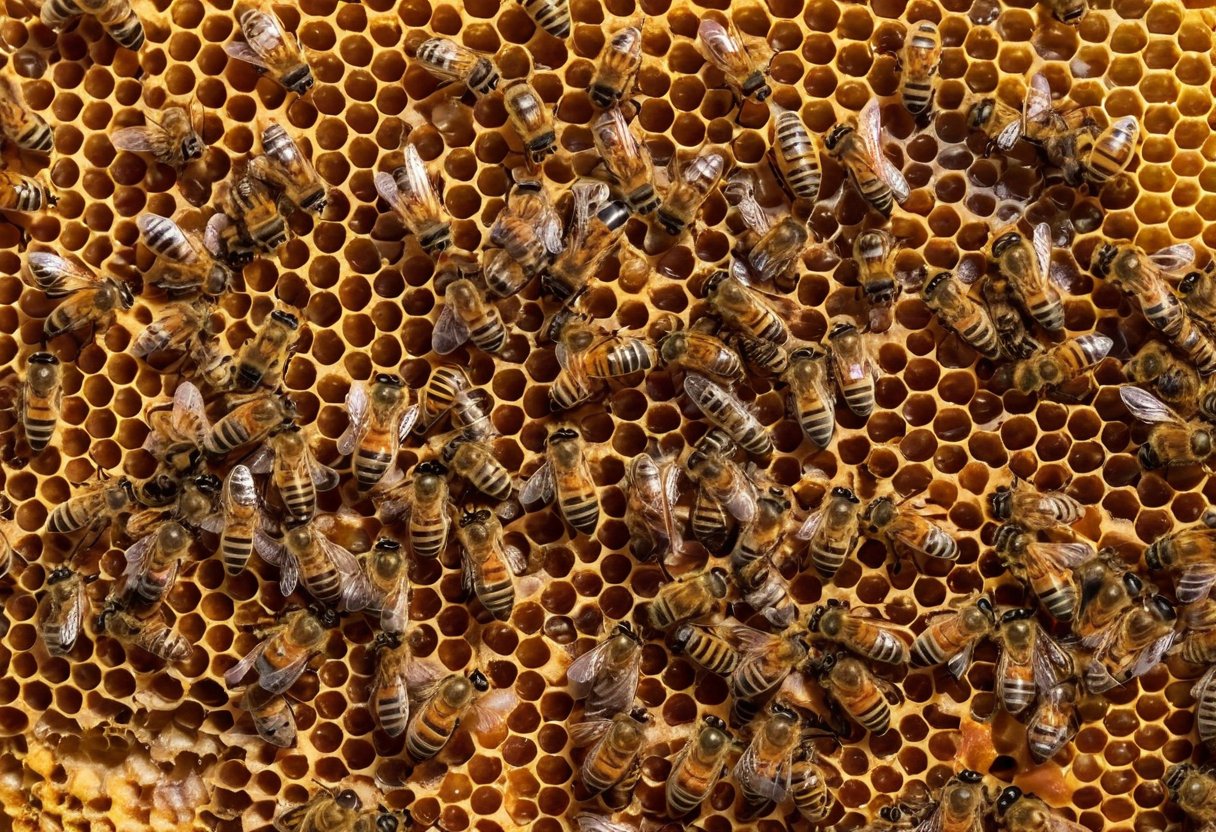
After the syrup is taken in and the treatment is done comes one of the most underrated moments in beekeeping — arranging the winter nest. This is not aesthetics, it is thermal engineering. In winter the colony forms a cluster — a dense ball of bees in which the core temperature is held at 20–35°C while it is -10°C outside. The cluster moves upward and sideways across the combs, eating its way through honey, and every wrongly placed frame can become a wall it bumps into and starves beside — in a hive full of honey.
The rules of the winter nest:
- Honey goes above and around the cluster, not below it. The cluster winters in the lower third of the nest and moves upward — full honey frames go on top and on both sides of the brood area. A full frame in the middle, which the cluster must "reach across" in the cold, is a classic cause of starvation in a full hive.
- Narrow the volume to the real strength. A colony covering 7–8 frames winters in a single box of 9–10 frames; a colony of 5–6 frames — in 6–7 frames. Spare boxes and half-empty combs come out. A large volume is the weak colony's enemy: more condensation surface, more space to heat.
- Pollen frames stay in the nest — one or two frames of pollen right next to the cluster. The bees will need it at the end of winter and in early spring, when brood rearing starts but flights are impossible.
- Old black combs leave the nest and go for rendering. Beyond hygiene, there is a pragmatic reason: old combs hold foulbrood spores and wax moth eggs. A nest of 2–3-year-old combs is a lighter, cleaner winter.
- A division board is mandatory behind the nest: every empty space behind the board is filled with a cushion, newspaper or insulation. The classic "back wall" protects the cluster from cold draughts off the back wall.
When exactly is the nest arranged? After the final treatment and the end of syrup feeding — usually the last days of October. Work fast, one box at a time, and the hive does not open again until spring. From that moment on, every "quick peek" is sabotage against your own apiary.
5. Mice: the small enemy that ruins big colonies
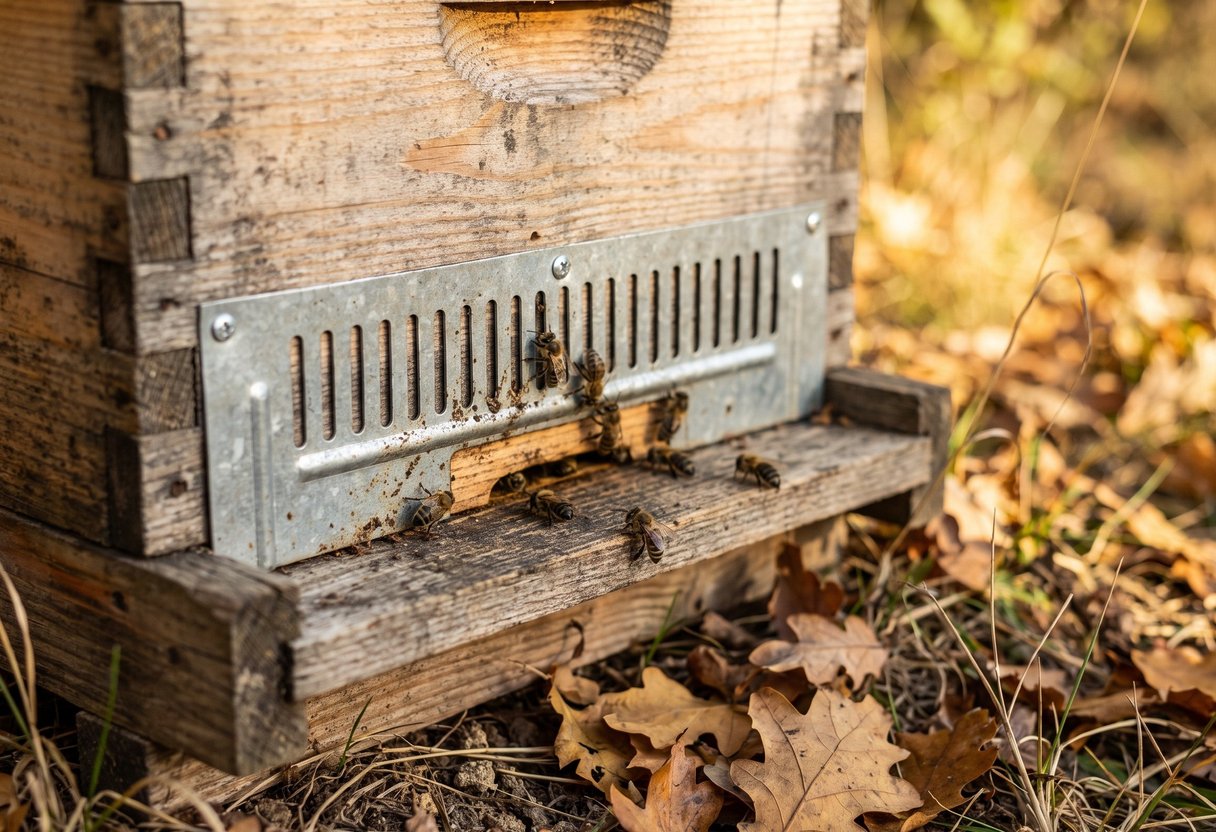
There is one paradox in the relationship between bees and mice: in summer, bees handle anything that breaks into the hive — but in winter the cluster is numbed by cold and does not defend itself. A field mouse that finds its way in during November builds a nest between honey combs, tears combs apart, fouls them with droppings and — because of the smell — drives bees away from that part of the nest. A colony that would have wintered calmly ends up pushed into the cold corner of the hive and dies. The mouse does not eat 30 lbs of honey — but it causes enough destruction to ruin a winter.
The solution costs pennies and is done once a year: a metal entrance guard with slots that pass a bee but not a mouse. It goes on in late October, when flight has slowed enough not to be a nuisance, and before the hard frozes when rodents start house-hunting. The alternative or complement is reducing the entrance to 2–3 cm — the extra benefit is that a narrow entrance keeps heat and blocks cold air from blowing straight into the cluster.
Two practical notes. First — do not install the guard too early: while there is heavy flight, it clogs traffic and causes crowding and panic at the entrance. Second — check it once in early November: on warm days bees sometimes plug it with dead bees and wax, and a plugged guard is worse than none. In heavy-mouse areas (near grain stores, farmyards) poison blocks can be used outside the hives, but well away from bees and pets.
Ready-made metal guards cost little and mount without tools — see hive mouse guards on Amazon.
6. Moisture, not cold: what actually kills bees in winter
Ask ten beginner beekeepers what kills colonies in winter and nine will say "the cold". Experienced keepers say something else: moisture. The winter cluster constantly emits heat and humidity — the breath of thousands of bees burning honey for energy. In a well-insulated but poorly ventilated hive, that humidity rises, condenses on the cold roof and rains back down onto the cluster as freezing drips. Bees soaked at the heart of winter get chilled, combs mold and nosema flourishes. A dry colony comfortably survives -15°F (-25°C); a wet one can die at 23°F (-5°C).
So October preparation is above all moisture engineering:
- Top ventilation. Leave a small opening at the top of the hive — a notch in the inner cover, a vent in the division board, or a purpose-made vent. The goal is to give humid warm air an exit instead of turning it into condensate. Note: ventilation must be an exit, not a draught — cold air must not move through the nest.
- A hygroscopic quilt. Above the frames, instead of empty space, place a cushion of wood shavings, straw, peat or a purpose-made absorbent material that soaks up the moisture of the cluster's breath and releases it on warmer days. It is the cheapest and most effective anti-condensation solution — working the same way attic insulation works in a house. Ready-made quilt boards can be browsed on Amazon.
- A slight forward tilt. Set the hive with a 1–2 degree forward tilt so any condensate or moisture runs out of the entrance instead of pooling on the bottom board. Check that the back is not the low point — that is where the cluster sits.
- Never seal the entrance completely! Bees need cleansing flights on warm winter days, and air exchange through a narrow entrance is part of the ventilation. A hermetically sealed entrance turns the hive into a closed, damp cellar.
7. Insulation: how much is enough
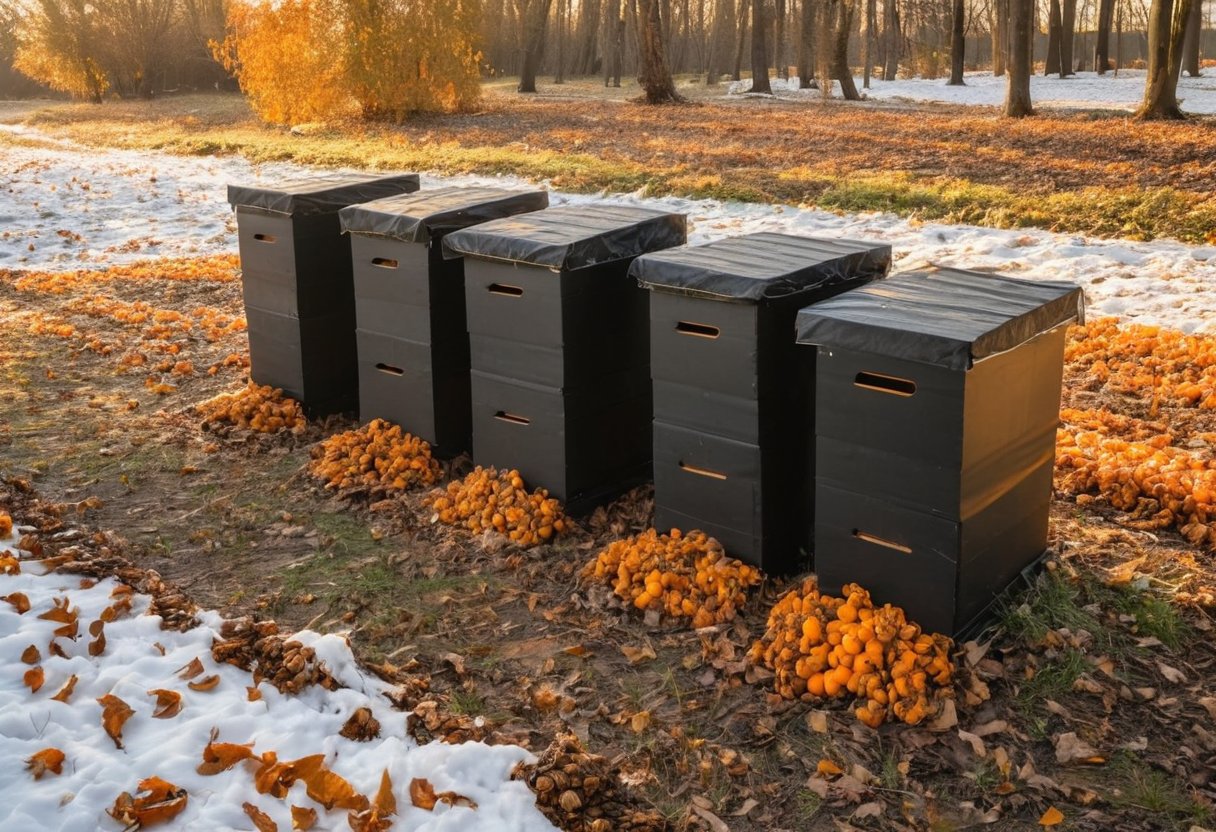
Here a cultural misunderstanding needs to be cleared up. A hive is not a house that "gets heated" — it is a shell that retains heat produced by the cluster. Bees do not need a 68°F room; they need a still, windless, dry space in which to save their energy. So insulating the hive in October is not a contest of who adds more layers — it is a balance: excessive insulation without ventilation is worse than moderate insulation with good ventilation.
What is done in practice:
- Wrapping the boxes — tar paper, foil insulation wraps, purpose-made winter wraps, or simply a thick layer of straw tied around the hive. The goal is to slow wind chill and night freezes. Thick-walled wooden hives need less; thin ones more.
- The roof matters most. Seventy percent of the time, warm air escapes upward — so an insulated roof (insulation layer under the outer cover) with a quilt underneath does more than wrapping the walls.
- Stands. The hive on metal or wooden stands, at least 4–6 inches off the ground, does not pull moisture from the soil and does not freeze into the mud. A windbreak behind the hives (fence, hedge, wall) cuts the wind chill that drives most heat loss.
- Do not overheat! An over-sealed, over-insulated hive without ventilation creates internal condensate and warm spells that break up the cluster and burn stores. The goal is stability, not warmth.
Browse hive winter wraps on Amazon — or make your own from tar paper; the principle matters, not the brand.
8. Wind protection and the apiary "village"
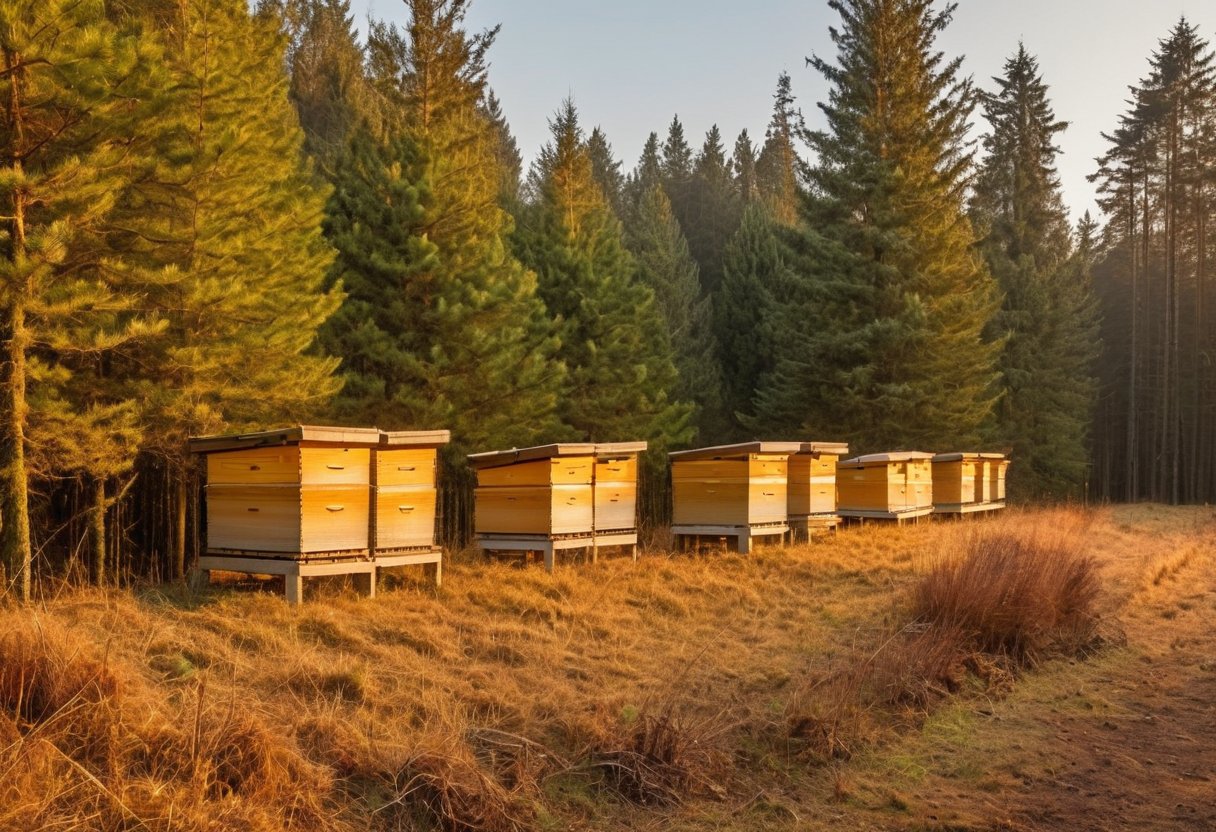
October is the month when the most is said about where the hive stands — and rightly so. The cold that kills is not the air temperature, it is the wind: it strips heat from every crack, every unsealed board, every unprotected side of the hive. A colony wintering in a sheltered spot behind a windbreak can save 20–30% of its energy compared to a colony standing in the open, exposed to the prevailing winter wind.
If the apiary is already in a good spot — great. If you have choices, use October for some small "urban planning":
- A windbreak — hedge, trees, an artificial barrier, or simply a straw wall 6–10 feet from the side of the prevailing winter wind;
- Leveling the hives — a hive standing crooked is a hive with gaps and condensation problems;
- Sunlight — in winter, every hour of sun on the entrance is free energy for early cleansing flights;
- Checking for winter flooding — the spot must not be in a cold-air pocket or a water-collecting hollow.
Interestingly, today's tools answer this question with data instead of instinct. The free Beehive Analyzer analyzes any GPS point in a 0.5–5 km radius: microclimate from historical data, terrain and slope, built-up areas, water surfaces and overall site suitability for an apiary. Before you move hives "somewhere more sheltered", three minutes with the GDD module — which shows how much heat the season has accumulated and when the key nectar plants bloomed around the spot — can save you a season of mistakes. The full walkthrough is in our Beehive Analyzer user guide.
One tip from practice: if you are thinking of moving colonies to a new site, October–November is the safe window — after the last active flight, bees adapt to new coordinates without problem by spring. In active season, a move risks disorientation and loss of flying bees.
9. Water and final apiary hygiene
An often forgotten but real task: water. In winter bees consume honey and need water to dilute it — especially when eating fondant. On warm winter days they go looking for water, and if the source is frozen or far, they fly to the neighbor's stream or faucet and never come back. Simple solutions work: a waterer with a slow-drip system that resists freezing; stones in a sun-warmed basin for landing spots; a "water package" — a plastic bottle with a slow drip into a trough in a sunny spot.
The final apiary cleanup in October is quick and worth it:
- mow tall grass around the hives — it holds moisture and shelters rodents;
- clear fallen leaves and branches that could block entrances;
- check the stands — old bottom boards get repainted or replaced;
- put away everything that should not spend winter outdoors.
10. The equipment: frames, boxes and the battle with the wax moth
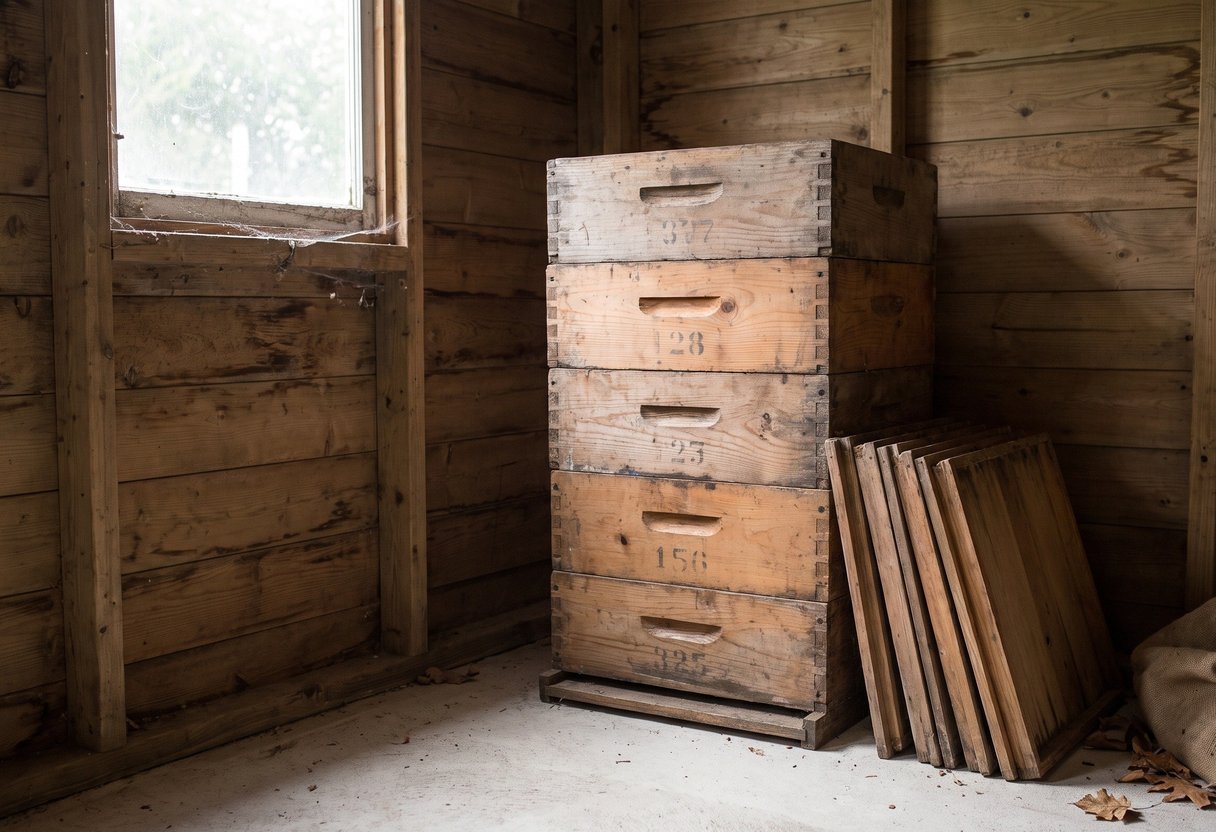
October does not end with the last closed hive. Quite the opposite — the month of the "quiet apiary" is the ideal time to deal with equipment, because in November the weather will not allow outdoor work, and in spring you will have no time for it.
Frames — the most valuable and most pest-prone resource:
- Frames from honey supers that do not enter the winter nests are stored dry, ventilated, ideally in closed stacks with exposure to light — the wax moth dislikes light and moving air.
- Sulfur or acetic acid — the classic protectors: burn sulfur in the closed stack (50 g per cubic meter, repeated in February) or place a jar of 80% acetic acid, whose fumes kill moth eggs. Both work; the acid is safer for the user and leaves no residue in the wax.
- Old black combs — straight to rendering. The ratio is simple: every comb over 3–4 years is surface area for disease and moth, and less honey next season.
- Inspect before storing — every frame is checked: combs with signs of foulbrood, mold or heavy moth damage come out of the common stack. One infected frame in a box of a hundred clean ones is an investment in disappointment.
Boxes and bottom boards: October–November is repair time — fresh paint or varnish on outer surfaces (especially the top edges where water sits longest), replacing rotten boards, tightening legs. One hour with a brush in autumn extends the life of boxes by years.
The extractor and the workshop: wash thoroughly, dry, coat metal parts with a thin layer of food-safe oil and store dry. The idea is simple: honey left on the walls is a magnet for wax moths and ants, and leftover moisture is rust.
The October calendar, week by week
Now that each activity is explained, here is how everything fits into the real month. An indicative plan for a temperate climate — adjust for your altitude and the forecast:
| Period | Main tasks | Notes |
|---|---|---|
| Oct 1–7 | Final inspection of all colonies; assess stores; last 3:2 syrup doses; mow the apiary | Work in the warm part of the day; write down the kilograms per colony |
| Oct 8–14 | Finish syrup; prepare fondant if needed; monitor brood and mite drop; store frames with acid/sulfur | No new syrup if nights fall steadily below 5°C |
| Oct 15–21 | Final varroa treatment (oxalic acid) at brood-free state; post-treatment check | The timing depends on brood, not the date |
| Oct 22–28 | Arrange the winter nest; narrow the volume; division board; moisture quilt; forward tilt | The last opening of the hives until spring |
| Oct 29–31 | Mouse guards; reduce entrances; wraps and insulation; windbreak; check waterers | Everything on the outside — no more work inside nests |
The common October mistakes — and how to avoid them
Year after year, the same mistakes repeat with depressing accuracy. Here is the list every beekeeper — beginner or experienced — should read out loud:
- "I left them as they are — they'll manage." The skipped final inspection means you do not know whether there is a queen, whether stores suffice and whether the colony is healthy. Autumn colonies do not "manage" — they are prepared, or they fail.
- Feeding syrup into November. Late syrup does not get capped, ferments, causes dysentery and makes winter bees work at 5°C. The deadline for syrup is October, not "when the bucket is empty".
- Skipping the final treatment "because the summer one worked". The summer treatment catches mites on the bees; the October one catches all of them. Without the final pass, the colony winters with mites on exactly those bees that must live until April.
- The big loose nest. "There was room, I left both boxes" — a weak colony in a big volume loses heat, condensation forms and the cluster cannot defend itself. Narrow to the real strength.
- Sealing the entrance completely. Trying to "keep the hive warm" by plugging the entrance is a guaranteed recipe for condensation — winter's deadliest factor.
- Opening the hive in November "just to check". Every opening after the nest is arranged costs energy and breaks the cluster. Winter monitoring is external: weight, sound, entrance.
- Ignoring the records. October's data — kilograms, strength, treatment dates — are the only way next autumn's decisions get better. A beekeeper who does not write things down repeats their mistakes with the persistence of a person without an archive.
What is happening inside the bees in October — a short biology
So the tasks are not just a checklist, it is worth understanding what exactly is happening in the hive this month:
The birth of the winter bees. In summer a worker lives 35–45 days — worn out by flying, brood feeding and building. In autumn the colony raises a special generation: winter bees that live 4–6 months. The biological difference is in their bodies — enlarged fat bodies, accumulated protein and reduced gland activity. This generation, emerging through September and October, is the colony until spring. That is why every treatment or stress on these bees in their first month is multiplied across the whole winter.
The end of brood rearing. The queen gradually slows and stops laying, and the colony enters a brood-free state usually between mid-October and mid-November — depending on region, altitude and weather. That moment is critical for varroa (see point 3) and for arranging the nest.
Cluster formation. At outside temperatures below 10–12°C bees begin gathering into a compact ball. The cluster has structure: inner bees generate heat, outer bees form an insulating shell, and the two groups rotate. The cluster moves up the combs eating honey like a slow sundial — which is exactly why nest arrangement is thermal engineering, not aesthetics.
The last flights. On warm October days bees make cleansing flights and gather the last pollen from autumn blooms — ivy, late herbs. The pollen brought in during October is the last fresh protein resource before the long winter.
Weak colonies: unite or gamble?
Every autumn the beekeeper faces a dilemma no handbook resolves cleanly enough: what do I do with a weak colony? Experience gives this framework:
- A colony of 6–8 frames with a young queen — it winters. Narrow the nest, top up the stores, insulate extra.
- A colony of 4–5 frames — borderline. Option: a tight nest with a big division board and serious insulation; risks stay high.
- A colony under 3–4 frames, or without clear evidence of a queen — the decision is one: unite. Two weak colonies winter better as one strong colony than as two dead ones. The safest method is the "newspaper combine": the weak colony goes above the strong one with a sheet of newspaper between, which the bees chew through in a day or two while adopting the shared smell.
Keeping weak colonies "to see what happens" is expensive curiosity: it costs resources, space and care time, while the odds of success are small. Beekeeping is the management of probabilities, and October is the month of realistic decisions. For detailed strategies see our article on queen introduction methods.
Records and planning spring in October
The final, most neglected activity of the month: writing and planning. October is when the beekeeper learns the most about their apiary — provided they write it down. What belongs in the diary this month:
- the strength of every colony at the final inspection (frames of bees);
- the real stores in kilograms and what was given as syrup;
- the date brood stopped and the date of the final treatment, plus its effect (mite drop);
- queen condition and origin (if new — a note on the line);
- what was narrowed, removed, replaced — so you know what exactly you open in spring;
- notes on the site — moisture, wind, problems.
Kept year after year, this list becomes the strongest tool in the beekeeper's arsenal: comparison. Why does this colony winter worse three years in a row? Why do varroa levels stay low until May after the October 12 treatment? Why do the colonies on one side of the apiary come out weaker? These are answers found in the diary — not in a memory that selectively keeps the good seasons.
That is why we, the team behind Beekeeping Diary, built exactly this — a free digital beekeeping diary in which every activity above has a ready field: autumn inspection, treatments, feeding, colony strength, hive maps and the history of every single hive. Our article on how to keep a beekeeping diary explains the system, and registration takes minutes at beekeeping-diary.eu.
And for those who want to plan spring with data right now: the free Beehive Analyzer analyzes any location in a 0.5–5 km radius — honey flow and pollen index for 101 nectar and pollen plants, verified vegetation from GeoPl@ntNet, pest maps from GBIF and iNaturalist, climate data and the GDD (growing degree days) module showing when every key plant bloomed and will bloom. Read our full Beehive Analyzer user guide — or just open the map and try your location now.
Summary: ten checkpoints done by the end of the month
- ✅ Final inspection — every colony counted and described;
- ✅ Stores at least 33–40 lbs, syrup finished, fondant if needed;
- ✅ Final varroa treatment at brood-free state;
- ✅ Nest narrowed and arranged — honey above the cluster, pollen beside it;
- ✅ Mouse guards on, entrances reduced;
- ✅ Top ventilation and a moisture quilt;
- ✅ Insulation on boxes and roofs — with measure;
- ✅ Windbreak, level stands, forward tilt;
- ✅ Water available on warm winter days;
- ✅ Equipment stored and moth-proofed — and everything written in the diary.
October is not the month of heroic actions — it is the month of precise ones. The beekeeper who walks through these ten points calmly and in the right order enters November with the confidence of someone who knows why every colony has a chance. The one who skips them spends winter with a heavy heart and a phone in hand, waiting for news of an empty hive. The difference between the two is not talent — it is one month of good work.
Frequently asked questions
When should I stop fall syrup feeding?
Ideally by mid-to-late October, depending on region. Bees process syrup above 10–12°C; later it stagnates and ferments. If stores are still short after that point, switch to winter fondant, which needs no processing.
Is the October varroa treatment mandatory?
October is the most effective window of the year: with brood finished, all mites sit on the bees and one oxalic acid treatment (dribble or vapor) kills over 90%. A colony that winters clean comes out strong; a colony with mites loses its winter bees.
How many pounds of stores does a colony need?
Roughly 33–40 lbs (15–18 kg) for a normal colony in a temperate climate; strong two-box colonies up to 50 lbs (22 kg). Try to keep at least half as real honey — bees winter better on honey than on pure sugar.
Should I open hives during winter?
No. After the nest is arranged the hive stays closed until stable spring temperatures above 12–14°C. Every opening breaks the cluster and costs precious energy. In winter, monitor only weight, sound and entrance activity.
Should I narrow the nests of weak colonies?
Yes — a weak colony in a big volume cannot control heat and moisture. Narrow to 5–7 frames, add a division board, insulate extra. Below 4 frames of bees, uniting with a strong colony is the wiser choice.
Can I count on an October flow?
No — by October the flow is effectively over; residual bloom sustains bees but yields no surplus. Winter stores must be in place before the month begins.
What are the most common October mistakes?
Skipping the final varroa treatment, late syrup feeding, an un-narrowed nest, a sealed entrance and no records. Each of them alone can cost a colony in February.
Related articles
- Main Beekeeping Activities in September — the previous step: treatment, feeding and the first winter preparations;
- Varroa: Seasonal Tracker — the full year-round strategy against the mite;
- How to Treat Varroa Mites Naturally — the alternative approaches;
- Beehive Analyzer — User Guide — analyzing any apiary location;
- Beekeeping Calendar 2026 with Varroa Checklist — the whole season in one helper.
Record your October work once — use it all year
The free Beekeeping Diary app keeps your autumn inspection, treatments and stores for every colony — and gives you the comparison that next year turns a guesser into a beekeeper.
🐝 Start Beekeeping Diary freeAnd before choosing a site for next spring's apiary:
📍 Open Beehive AnalyzerFree download: "October Wintering Checklist"
We prepared a short printable checklist with the ten main October activities, with tick boxes per colony — just register free in Beekeeping Diary and open it from the resources section. Print it, put it in your bee box, and tick your way through each week of the month. The bees will thank you — and you will be the only beekeeper on the street who knows, on October 29th, that everything is done.